Creative, sustainable gift packaging that will delight
Everyone knows it: the huge pile of torn gift wrap left over after a party. A sight that often leaves you with a slight pang of guilt. Sustainable gift wrapping is the conscious alternative – one that relies on reusable, recycled, or natural materials. It's about giving joy without producing a mountain of waste.
Why sustainable packaging is more than just a trend
The desire to live more consciously and sustainably is permeating more and more areas of our daily lives. Gift-giving is no exception. Choosing sustainable packaging is therefore far more than a fleeting trend. It's a genuine sign of appreciation – for the recipient, but also for our planet. It shows that you've put thought into it, going beyond just the contents.
In Germany alone, thousands of tons of wrapping paper end up in the trash every year during the Christmas season. It is often coated, decorated with glitter, and therefore not recyclable. This enormous consumption stands in stark contrast to the growing desire to conserve resources, especially for a product that often only fulfills its purpose for a few minutes.
A small decision with a big impact
Switching to environmentally friendly alternatives is neither complicated nor expensive. What it mainly requires is a slight shift in perspective: Instead of buying new disposable products every time, we can use what we already have or invest in durable solutions.
Sustainable packaging transforms a fleeting gesture into a lasting message. It tells a story of mindfulness and creativity, making the unboxing experience itself part of the gift.
This conscious approach brings with it several positive effects that go far beyond simply avoiding waste.
- A very personal touch: Self-designed or reusable packaging, such as fabric cloths (Furoshiki) or beautifully decorated boxes, gives every gift a unique and personal touch.
- It fosters creativity: The search for sustainable solutions sparks the imagination. Old maps, sheet music, or even beautiful fabric scraps can be transformed into wonderful and unique packaging material.
- Values to pass on: By using sustainable packaging, we send a clear message. We show family and friends that we care about the environment and perhaps even inspire them to do the same.
- Conserves valuable resources: By reusing materials or using recycled paper, the consumption of wood, water and energy is noticeably reduced.
Ultimately, the way we present a gift reflects our attitude. Sustainable gift wrapping isn't about sacrifice, but rather a genuine enhancement. It demonstrates that style and environmental awareness can go hand in hand and transforms every occasion into an opportunity to act consciously and thoughtfully. A small step with great symbolic power, showing that the most beautiful gifts are often those that have been carefully chosen and wrapped.
The basics: What's behind sustainable packaging materials?
The term "sustainable" is often used, but what does it actually mean when it comes to gift wrapping? Quite simply: it's about choosing materials that have the least possible impact on our planet, from raw materials to disposal. Sustainable gift wrapping is therefore not just a pretty cover, but a conscious part of a circular economy.
Imagine the life cycle of packaging like that of a tree. It grows, fulfills its purpose, and in the end, its material returns to soil, from which something new can grow. Sustainable packaging aims to do exactly that: create a closed loop instead of ending up as waste in a landfill.
Key terms explained simply
To make truly good decisions, we need to understand the language of sustainability. Often, terms are used interchangeably, even though they have subtle but important differences.
- Recyclable: This material can be collected, processed, and used to make new products after use. Waste paper is the classic example.
- Biodegradable: Sounds good, but it's deceptive. It only means that the material can decompose through microorganisms. However, this can take forever and, under the wrong conditions (such as in a landfill without oxygen), can even release harmful gases.
- Compostable: That's the gold standard. It's a special, controlled form of biodegradation. Under specific conditions, the material decomposes in a compost heap within a short time into valuable humus – completely without harmful residues.
The difference is enormous. A plastic bag advertised as "biodegradable" often only breaks down into tiny microplastic particles in nature. Nobody wants that. True compostability is what matters here.
This concept card sums it up perfectly: A successful sustainable gift wrapping combines the joy of giving, environmental awareness and a stylish design into a harmonious whole.
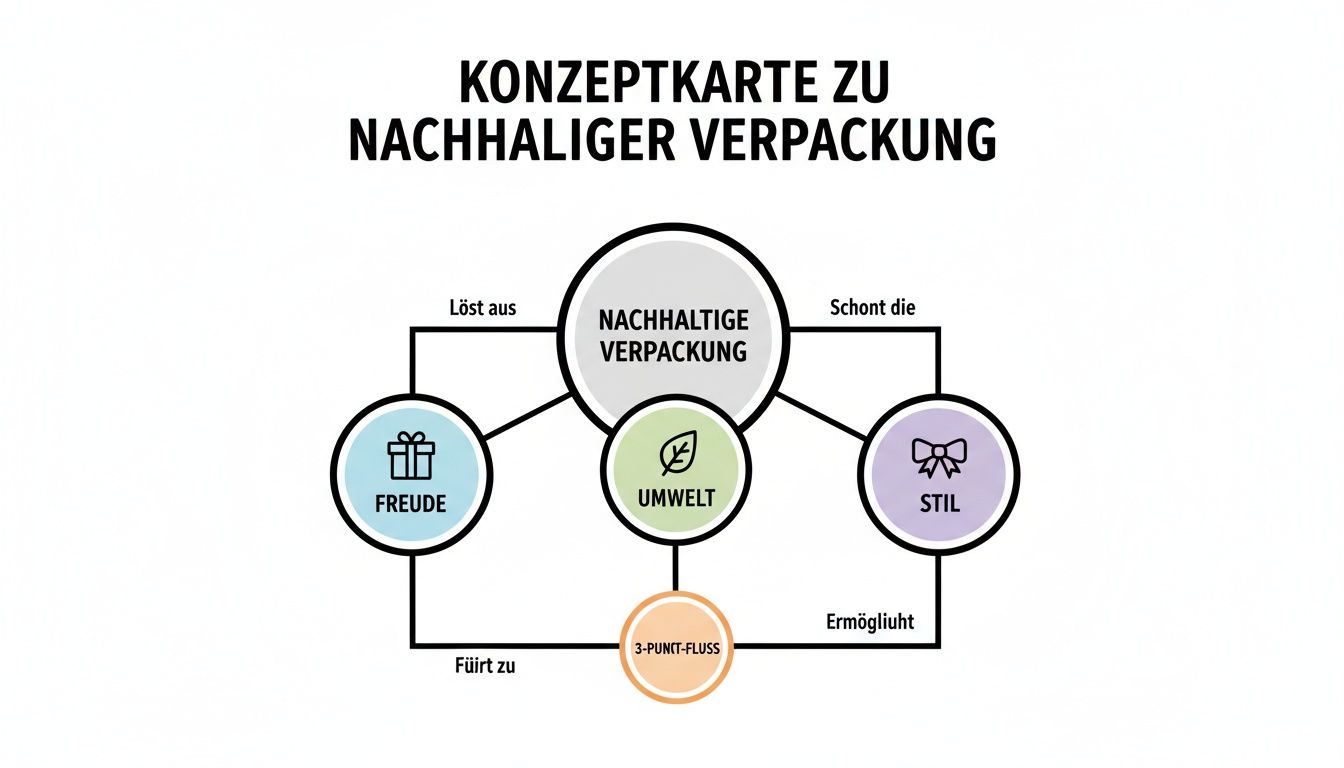
The graphic beautifully illustrates that sustainability doesn't have to be a compromise. Rather, it's a central part of a thoughtful and appreciative gift experience.
The life cycle is decisive
Packaging is only truly sustainable when its entire life cycle is considered. It's not enough to simply ask, "Can I throw this in the recycling bin?" The entire chain matters – from raw material extraction and production to disposal.
Packaging made from recycled material, produced using green electricity and recycled after use, comes closest to the ideal of a closed loop.
And the trend is moving in the right direction. The figures show that our awareness is growing and the systems are improving. In Germany, the amount of packaging waste fell to 17.9 million tons in 2023 – a significant decrease of 1.1 million tons. At the same time, the recycling rate climbed to an impressive 75.4 percent . This proves that conscious choices for reusable and recyclable materials really do make a difference. Those who want to delve deeper can find further insights into the development of packaging waste at bvse.de.
Materials in direct comparison
Which material is right for your gift? That depends, of course, on the gift itself, but also on the desired style. Not every option is suitable for every occasion.
To make your decision easier, we have compiled an overview here that clearly compares the most common sustainable materials.
Comparison of sustainable packaging materials
| material | Advantages | Disadvantages | Ideal for |
|---|---|---|---|
| Recycled paper | Resource-efficient, widely used, easily recyclable, often cheaper | Lower tear resistance than virgin fiber paper; appearance may be more rustic. | Classic gifts, books, smaller boxes |
| Grass paper | Very resource-efficient (little water & energy), rapidly renewable raw material | Often somewhat more expensive, not available everywhere, characteristic hay appearance | Eco-friendly gifts, natural cosmetics, handmade products |
| Fabric (Furoshiki) | Infinitely reusable, highly flexible for all shapes, elegant appearance | Higher purchase price (but it pays for itself), requires folding technique | Bottles, round or irregularly shaped gifts, as part of the gift itself |
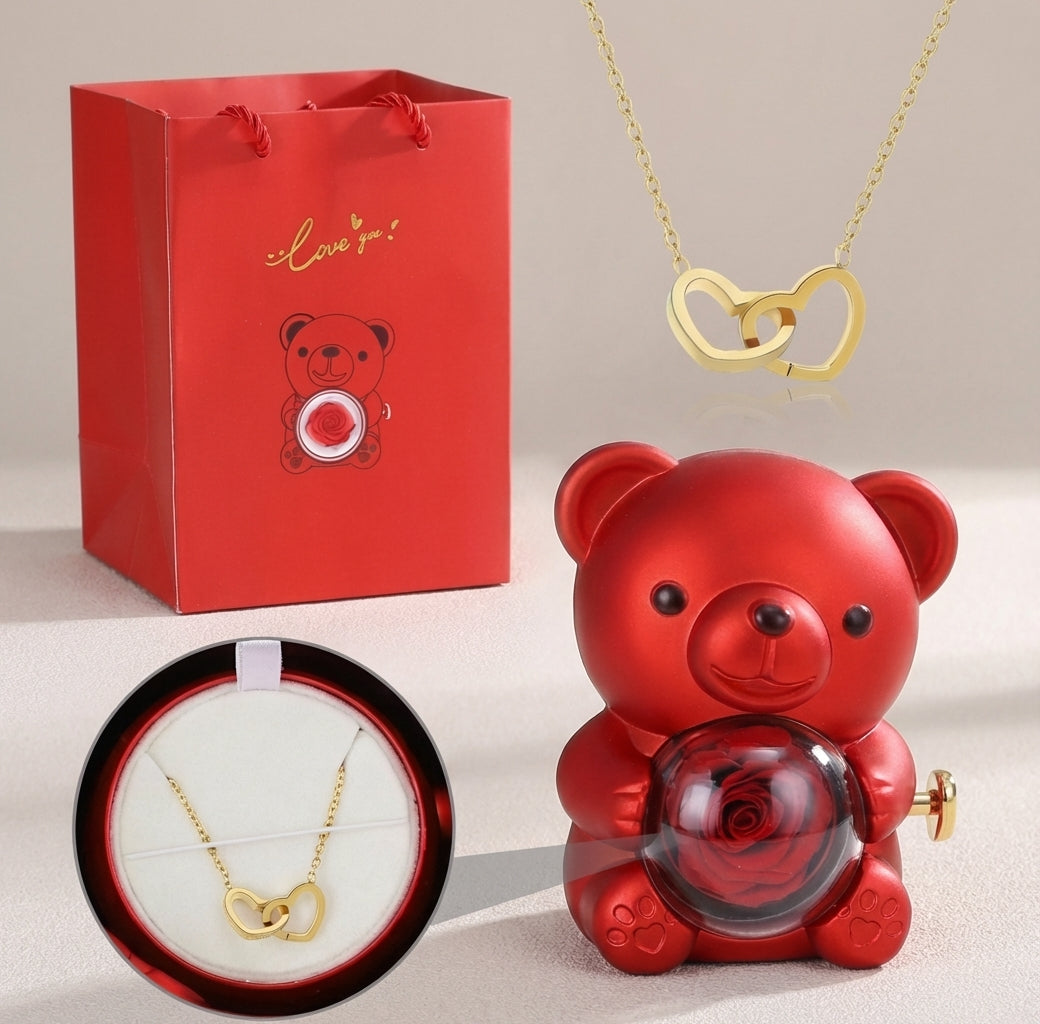
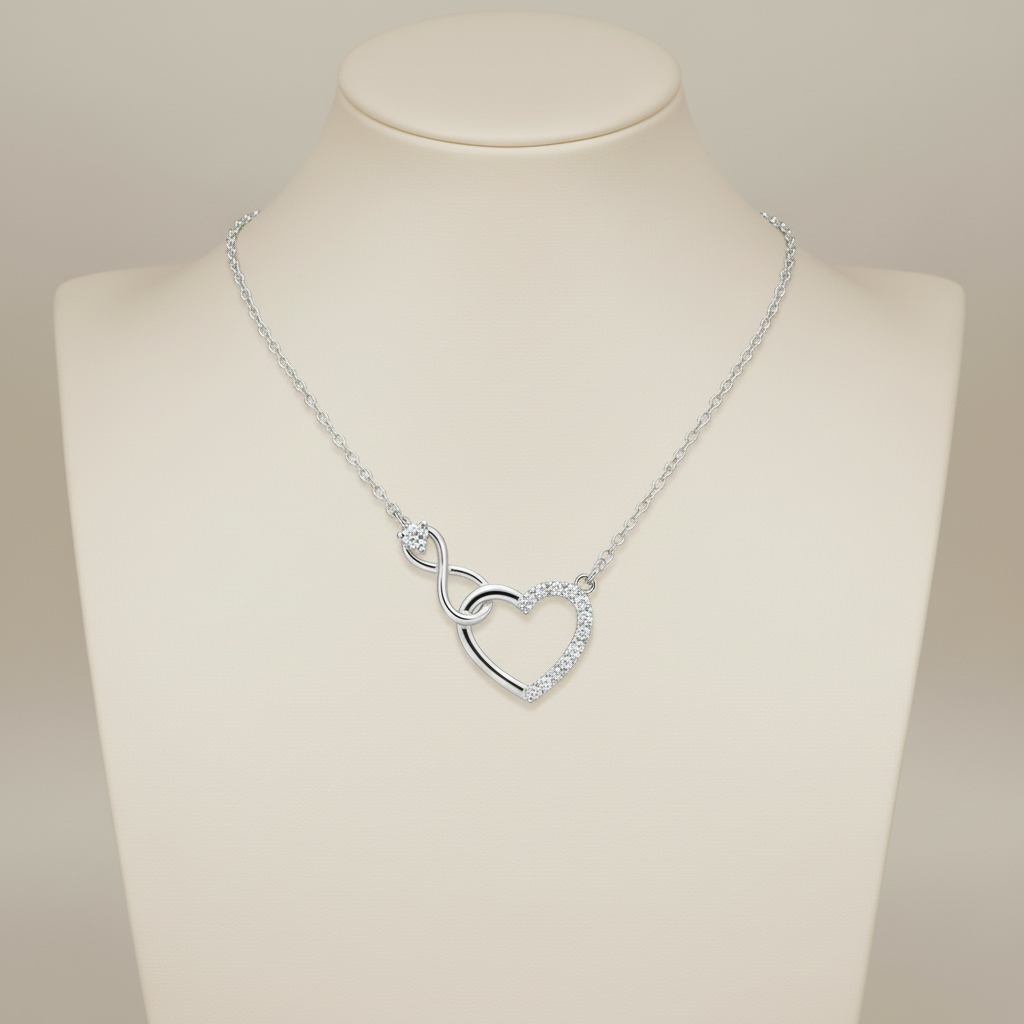
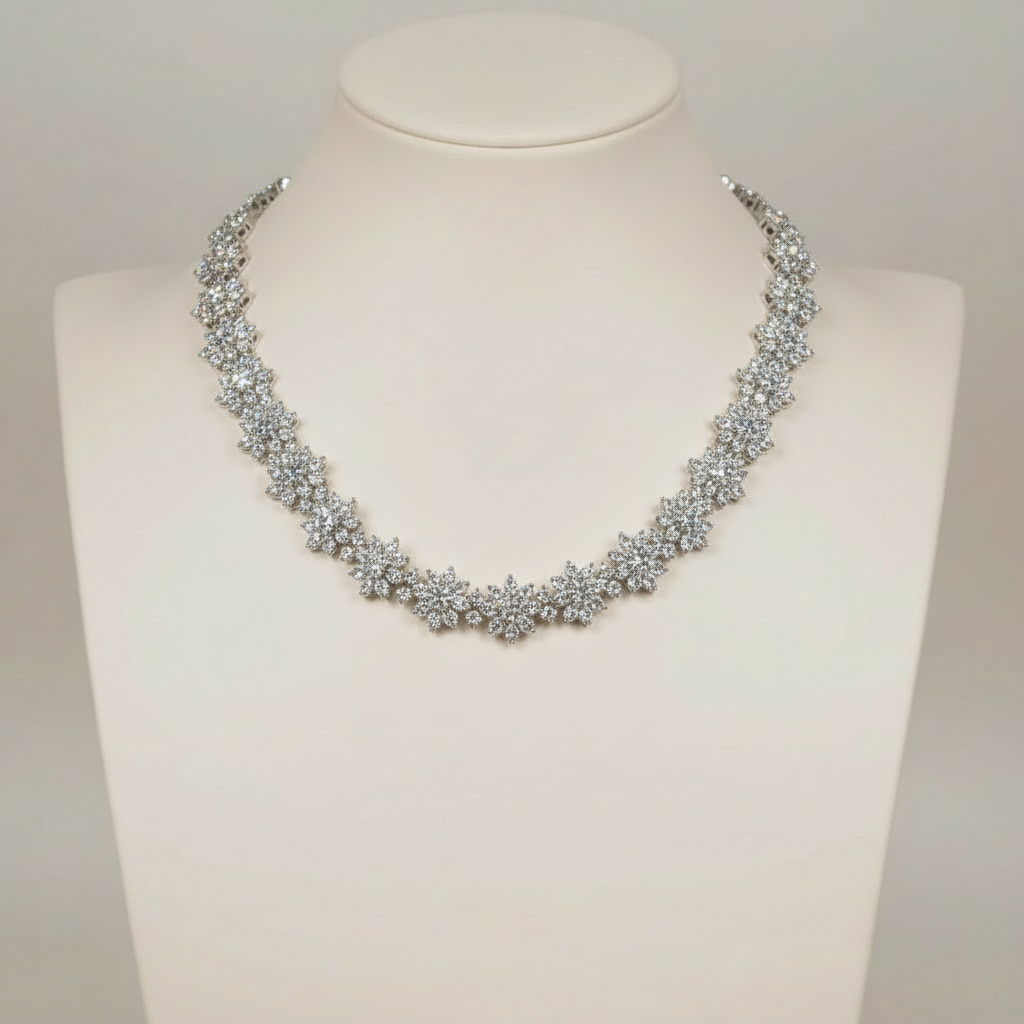
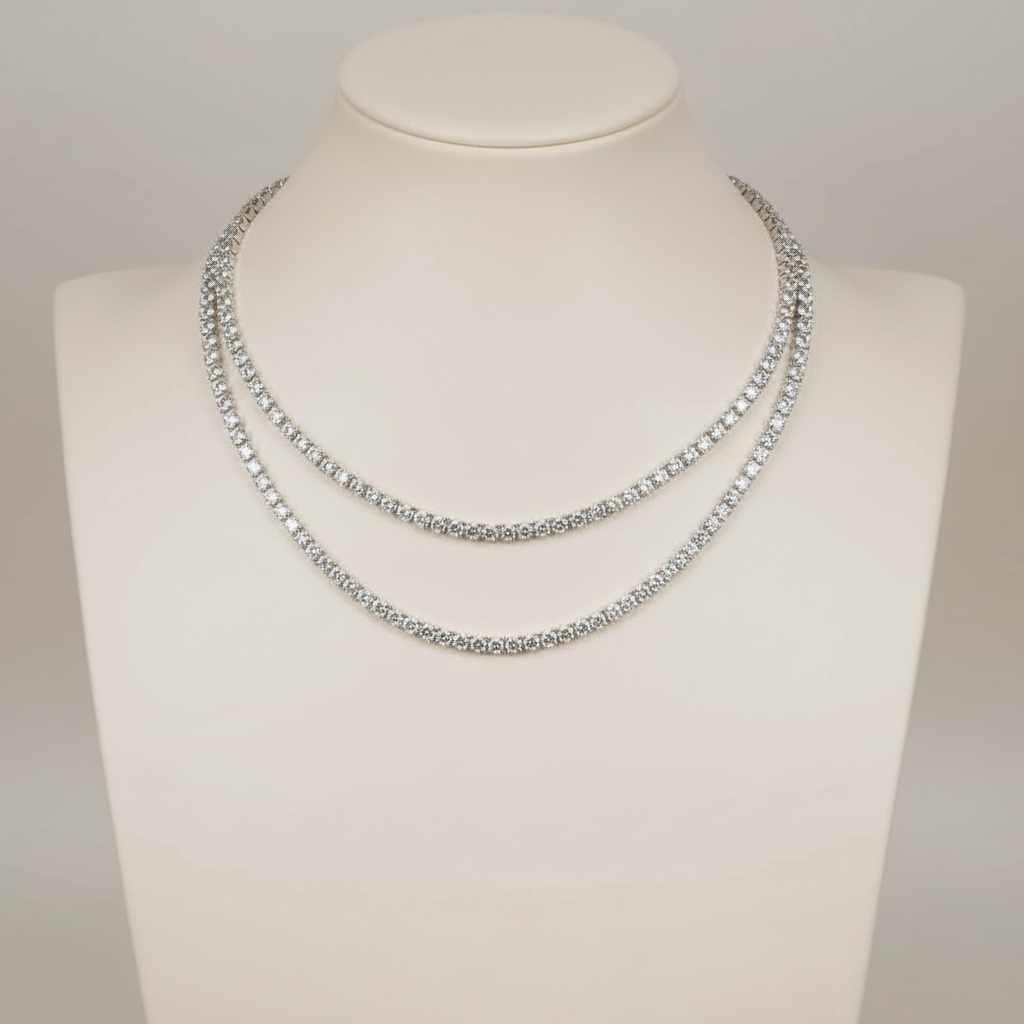
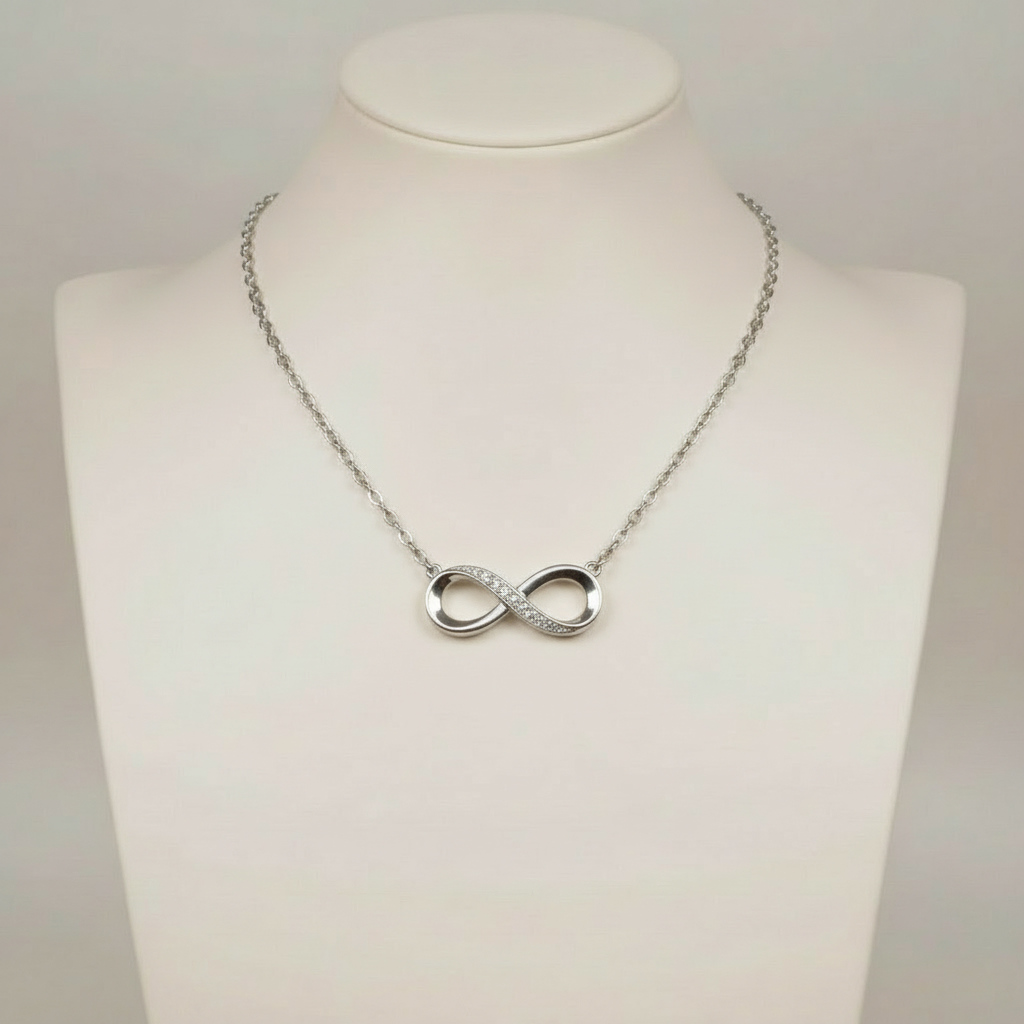
| Reusable boxes | Very durable, offer good protection, can be used for storage | Requires storage space, higher price, less flexible in size | Jewelry (like at Amorlune), high-quality gifts, sets |
As you can see, every sustainable gift wrapping has its own unique strengths. Ultimately, the best choice is the one that not only suits the gift but also has the greatest chance of getting a second life – whether through reuse or proper recycling. That's exactly how we close the loop.
Creative and personal DIY packaging ideas
Sustainability doesn't have to be complicated or expensive – often the most creative solutions are already at home. Homemade, sustainable gift wrapping isn't just good for the environment; it also gives every present an incredibly personal and thoughtful touch. It shows that someone has really put time and thought into it.
Instead of buying new wrapping paper, we can rediscover treasures that might otherwise have ended up in the recycling bin. This approach not only saves resources but also makes wrapping gifts a creative act that brings almost as much joy as giving them.
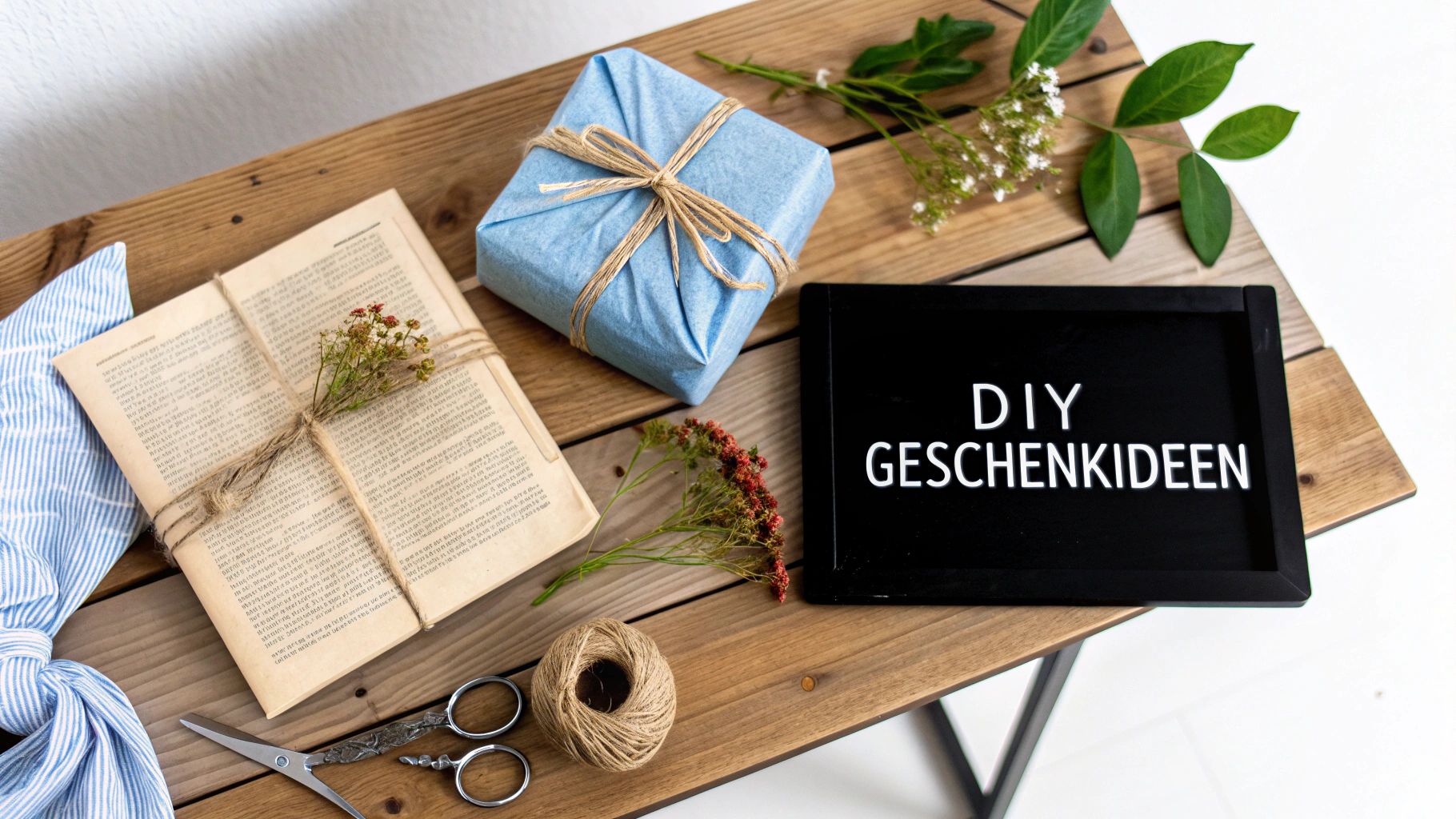
Upcycling: Giving old treasures a new lease on life
The easiest way to create unique packaging is through upcycling. Materials that already tell a story instantly give the gift character and depth.
So before you throw away some old paper next time, pause for a moment and look at it with fresh eyes. Often, it holds the potential for a beautiful and stylish package that is truly unique.
Here are a few ideas you can implement immediately:
- Newsprint: A classic, yet timelessly elegant. Pages from the arts and culture section or those with interesting graphics are particularly well-suited.
- Old maps: Perfect for travel-loving friends. The fine lines and delicate colors of road or hiking maps look incredibly decorative.
- Sheet music: Musicians and music lovers will adore this packaging. It exudes a wonderful sense of nostalgia and elegance.
- Book pages: Pages from old, falling-apart books can make a very romantic and literary cover, especially if you are giving a book as a gift.
The art of furoshiki: fabric as packaging
One of the most beautiful and flexible methods for sustainable gift wrapping comes from Japan: Furoshiki . This traditional technique uses square cloths to artfully wrap gifts of any shape.
The best part? Its reusability. The cloth itself becomes part of the gift and can be reused countless times by the recipient – as a scarf, table decoration, or even as packaging again.
Furoshiki is more than just wrapping; it's a gesture of mindfulness. Every knot and every fold is carefully placed, transforming the gift into a small work of art.
The process is simpler than it initially appears. Here are basic instructions for a rectangular gift:
- Spread out the cloth: Place the furoshiki cloth on a flat surface with one point facing you.
- How to place the gift: Place the gift diagonally in the middle of the cloth.
- Fold in the first corners: Take the corner closest to you and fold it over the gift. Repeat this with the opposite corner.
- Fold in the sides and knot them: Now fold the two side corners neatly towards the center, grasp the ends and knot them securely and attractively above the gift.
For oddly shaped gifts like bottles or round cans, there are special folding techniques that can be easily found online.
Decoration from nature
To give your DIY packaging the finishing touch, you don't need to resort to plastic ribbons or glitter. A walk through the woods or your own garden often provides the most beautiful decorative materials – completely free and biodegradable.
These natural elements give each package a rustic and authentic touch that perfectly matches the idea of sustainability.
Combine the natural accents with simple packing paper or fabric for a particularly harmonious look. Here are a few suggestions:
- Fresh or dried branches: fir branches in winter, rosemary or eucalyptus branches in summer.
- Pine cones and acorns: Small and subtle, but with a big impact. They can easily be attached with jute twine.
- Dried flowers and grasses: A small bouquet of dried lavender or baby's breath not only looks beautiful, but also smells wonderful.
- Pressed leaves: Especially in autumn, colorful leaves can be collected, pressed and glued on as decoration.
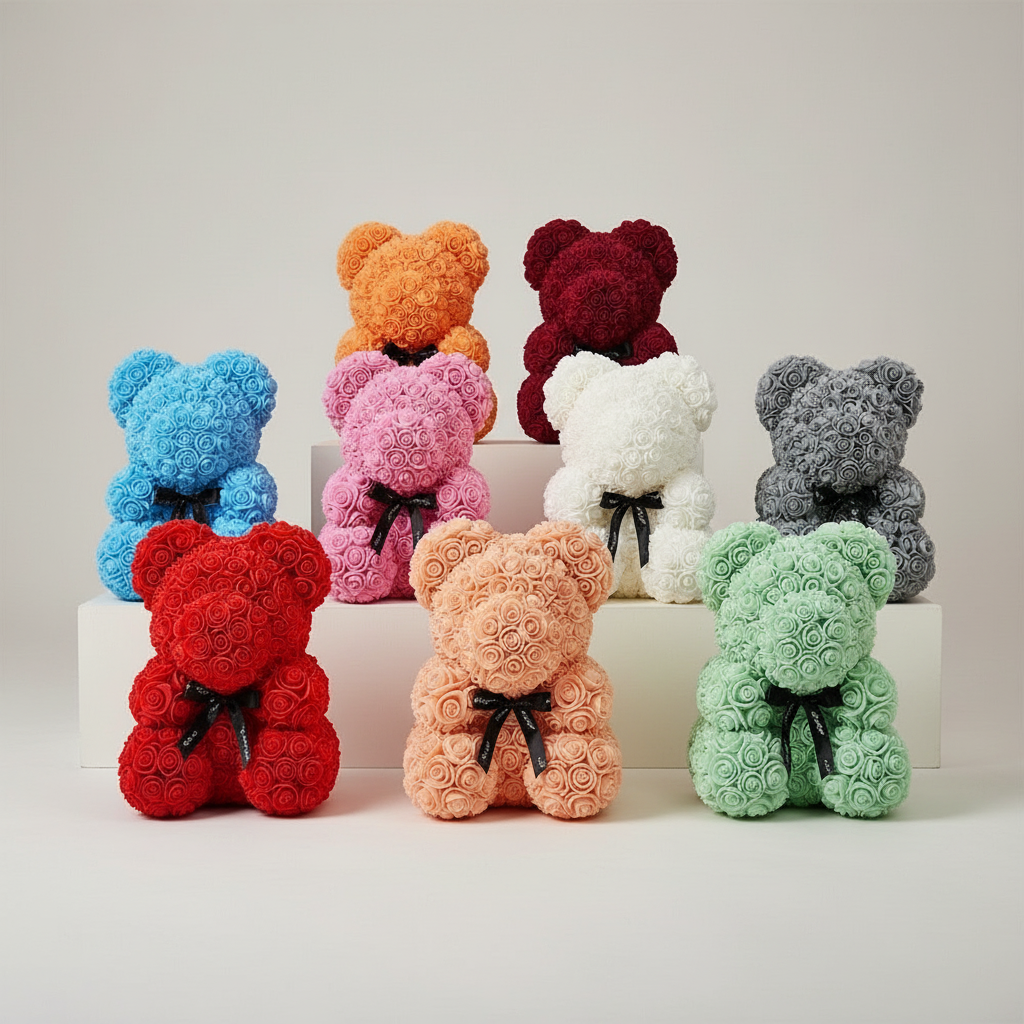
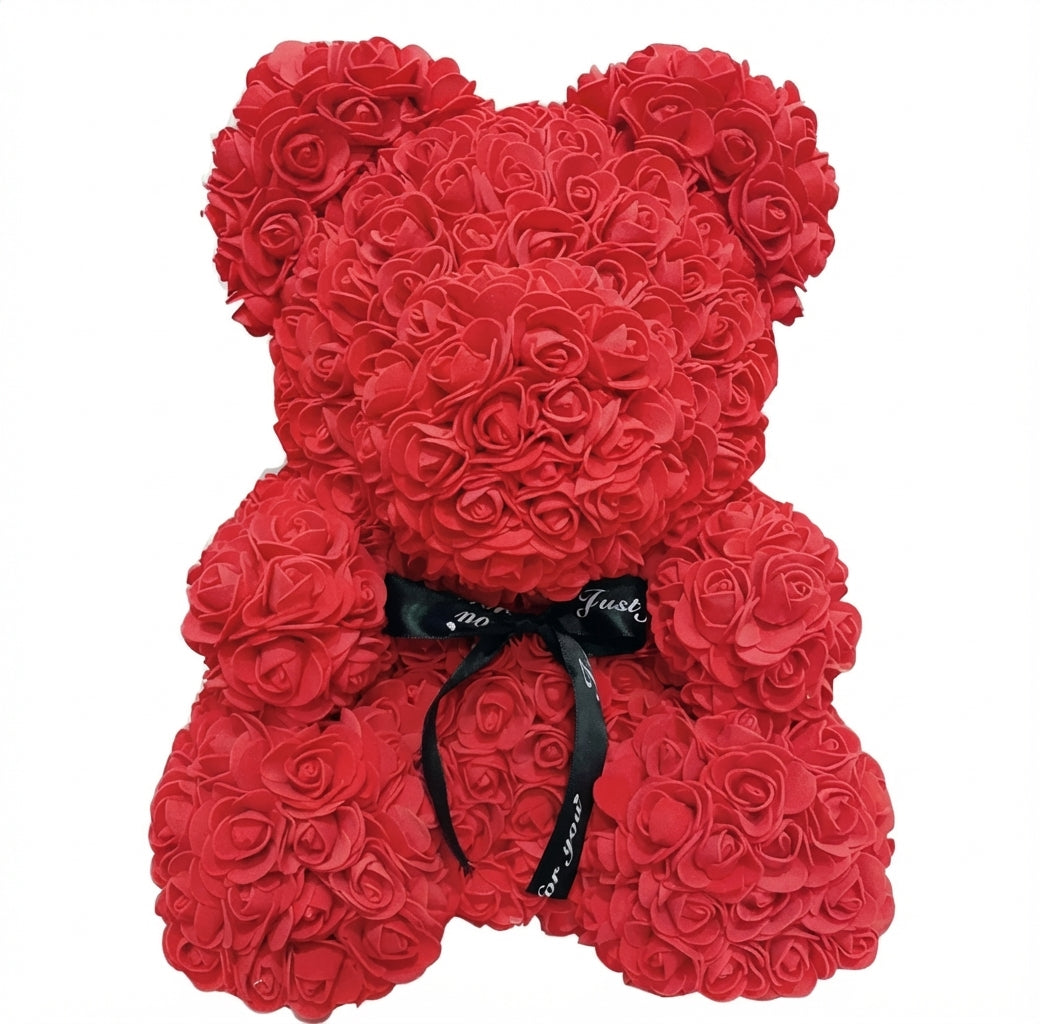
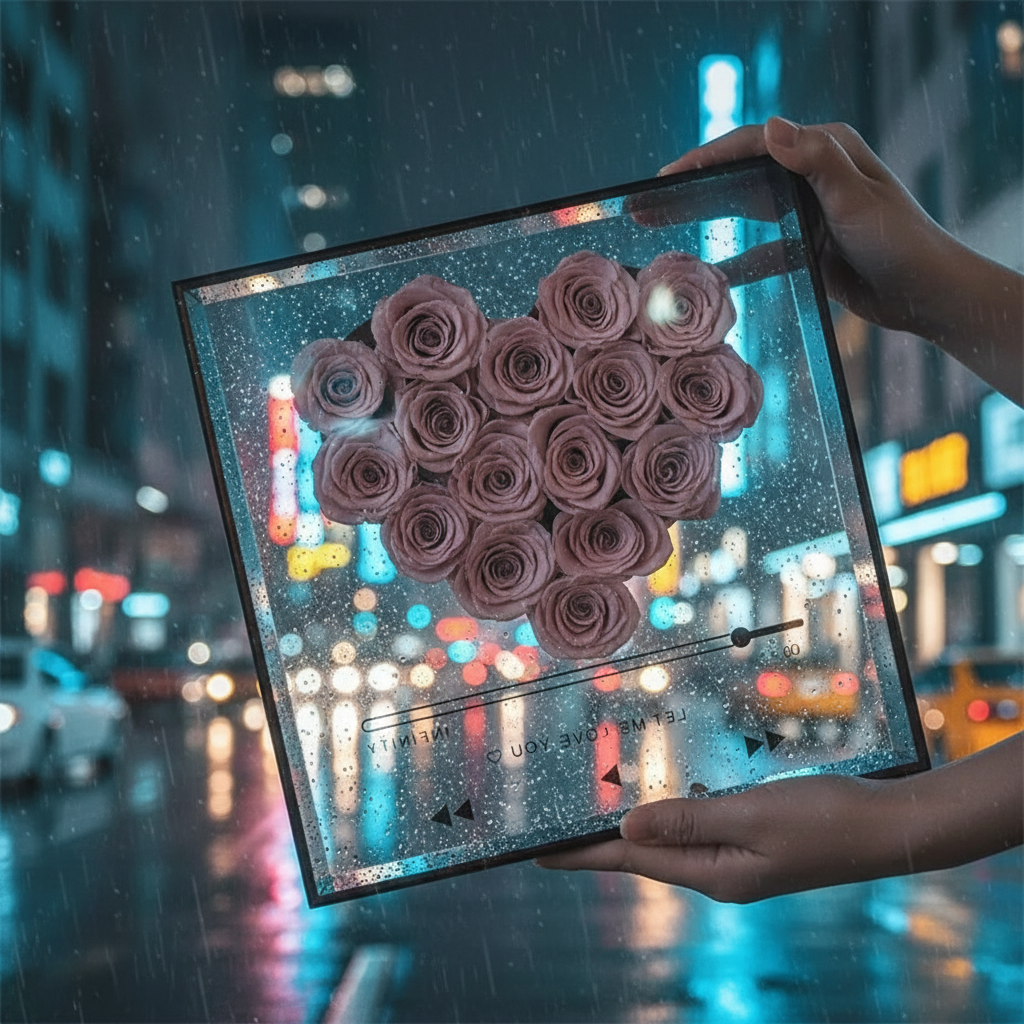
These natural details make each sustainable gift wrapping truly unique. If you're looking for further inspiration on how to creatively implement gift ideas with roses , for example, you'll find many valuable suggestions in our blog post on the topic. These ideas can be wonderfully combined with natural packaging methods, creating a thoughtful and lovingly crafted gift.
Here's how to find sustainable gift wrapping that's actually worth it.
Let's be honest, who always has time for elaborate DIY projects? But that's no reason to forgo sustainability when it comes to packaging. There are more and more great, ready-made alternatives available – but how do you distinguish genuine eco-heroes from clever greenwashing? With a little know-how, the selection becomes child's play.
The trick is to look more closely and ask the right questions. Truly sustainable gift packaging impresses not only with its attractive exterior, but above all with its inner qualities: the material, the manufacturing process, and whether it can be reused or at least easily recycled.
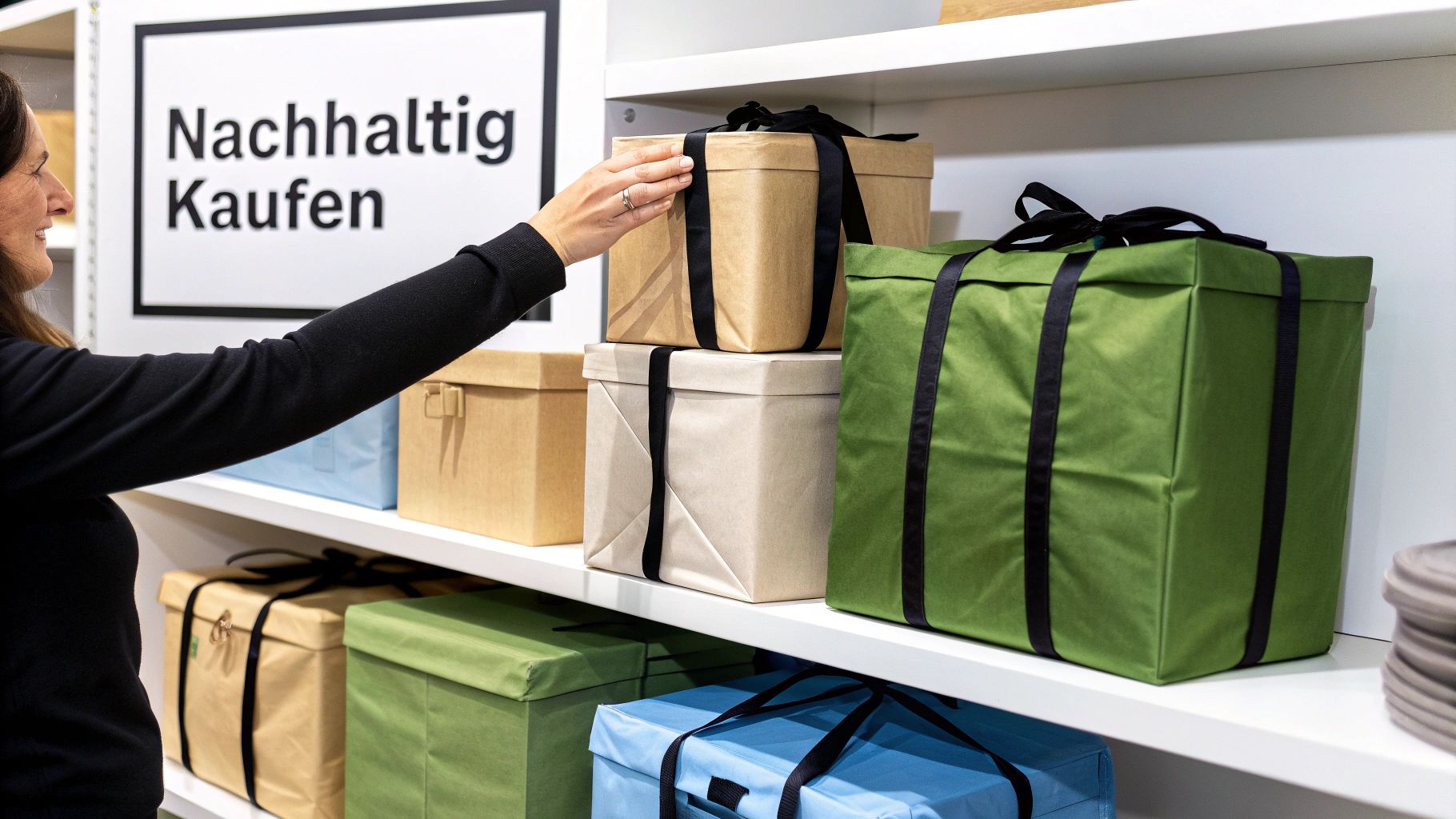
Seals and certificates as a guide in the jungle of offers
In the jungle of offers, eco-labels are your best friends. They are like a seal of approval from independent testers and tell you at a glance whether a product meets certain standards.
Don't be misled by vague terms like "environmentally friendly" or "green," but look for concrete, recognized labels. They will give you real guidance.
You should remember these three:
- The Blue Angel: The oldest and most established environmental label in Germany. For paper products, it guarantees that they are made from 100% recycled paper and that strict rules regarding the use of chemicals were followed during production.
- FSC (Forest Stewardship Council): You often see this label on wood and paper products. It stands for wood from responsibly managed forests. For wrapping paper, "FSC Recycled" is the top choice because it is made entirely from recycled material.
- PEFC (Programme for the Endorsement of Forest Certification Schemes): Very similar to FSC, but a different global system for ensuring sustainable forest management.
If you spot one of these seals on a package, you can be sure you're making a good choice. You're not only supporting the protection of our forests, but also production that uses our resources responsibly.
Your checklist for conscious shopping
Whether in-store or online – with this simple checklist in mind, you'll avoid the greenwashing trap. The demand for genuinely eco-friendly solutions is steadily growing. Although the general willingness to pay for sustainable packaging has declined slightly, a full 66 percent of consumers still value waste reduction. For two-thirds, recyclability is a crucial criterion. Younger shoppers, in particular, are even prepared to make minor compromises in appearance for greater sustainability. You can find more fascinating insights into consumer behavior at simon-kucher.com .
These points will help you make your decision:
- Check the material: Opt for recycled paper, grass paper, or certified paper. Steer clear of coated glossy paper and anything that glitters – that's the death of any recycling.
- Look out for seals: Specifically look for the Blue Angel, FSC or PEFC.
- Prioritize reusability: Ask yourself: Can this be used again? Cloth bags, attractive boxes or tins are the clear winners here.
- Living a minimalist lifestyle: Often, less is simply more. Sometimes a simple band of grass paper or a pretty cord is enough, instead of wrapping the entire gift.
Why investing in quality pays off
Sure, high-quality, reusable packaging like cloth bags or sturdy gift boxes costs more upfront than a roll of disposable paper. But that's a short-sighted calculation. In the long run, they not only protect the environment but also your wallet.
Think of all the occasions throughout the year: birthdays, Christmas, anniversaries. A beautiful box or a fine scarf will be used countless times. The one-time purchase quickly pays for itself.
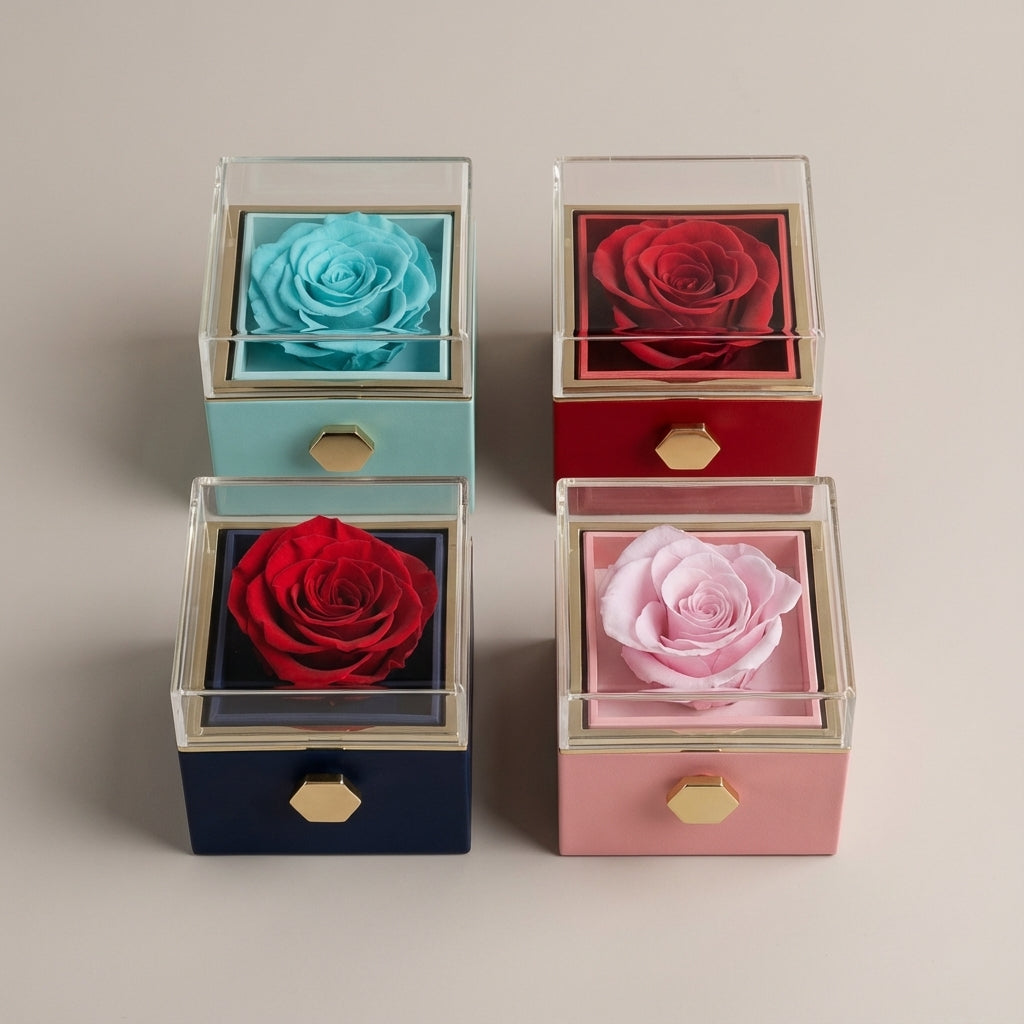
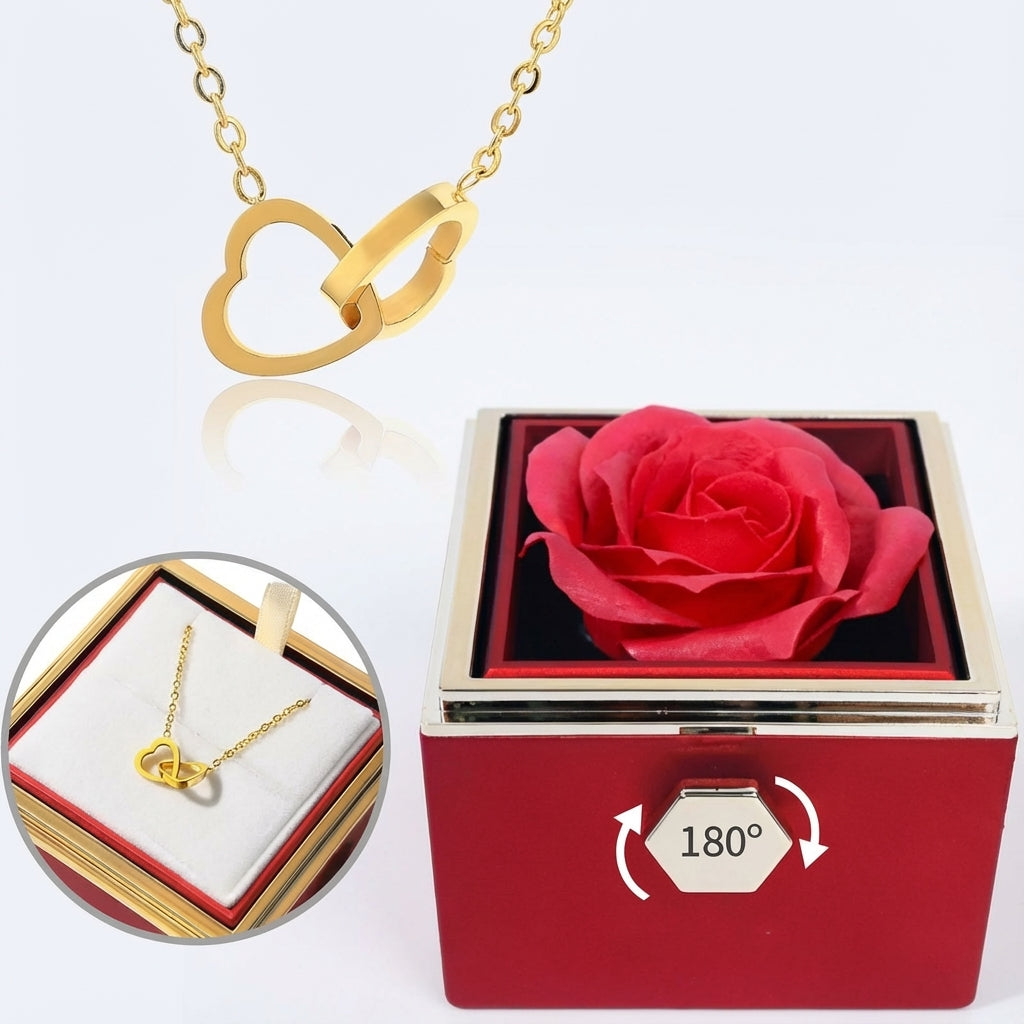
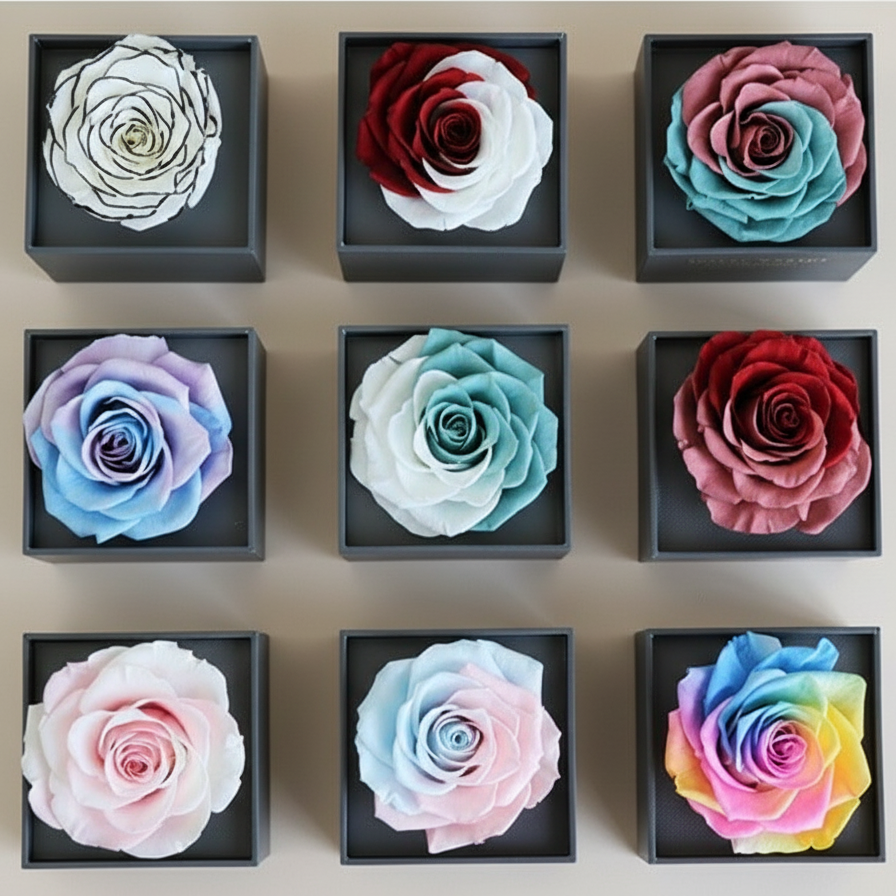
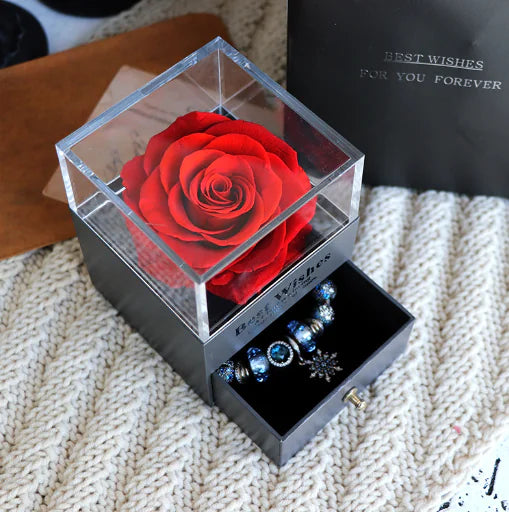
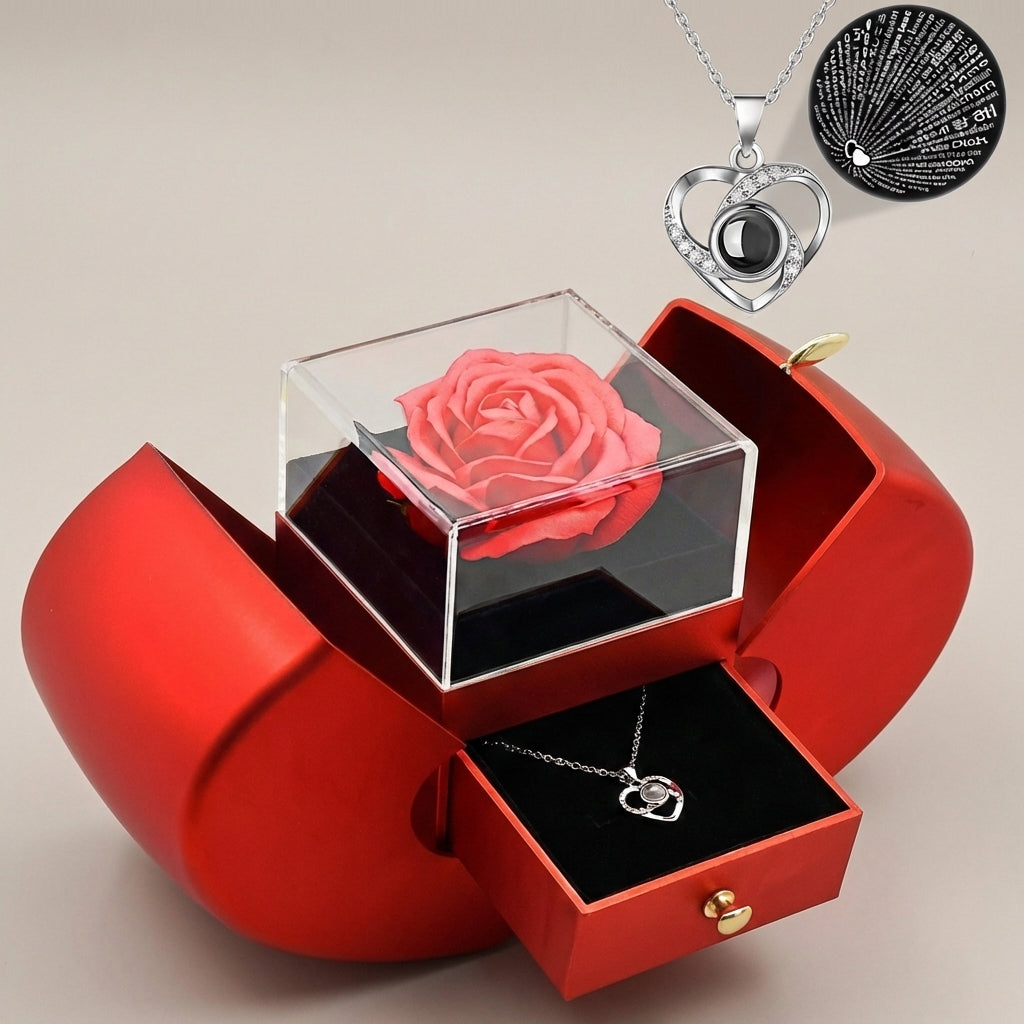
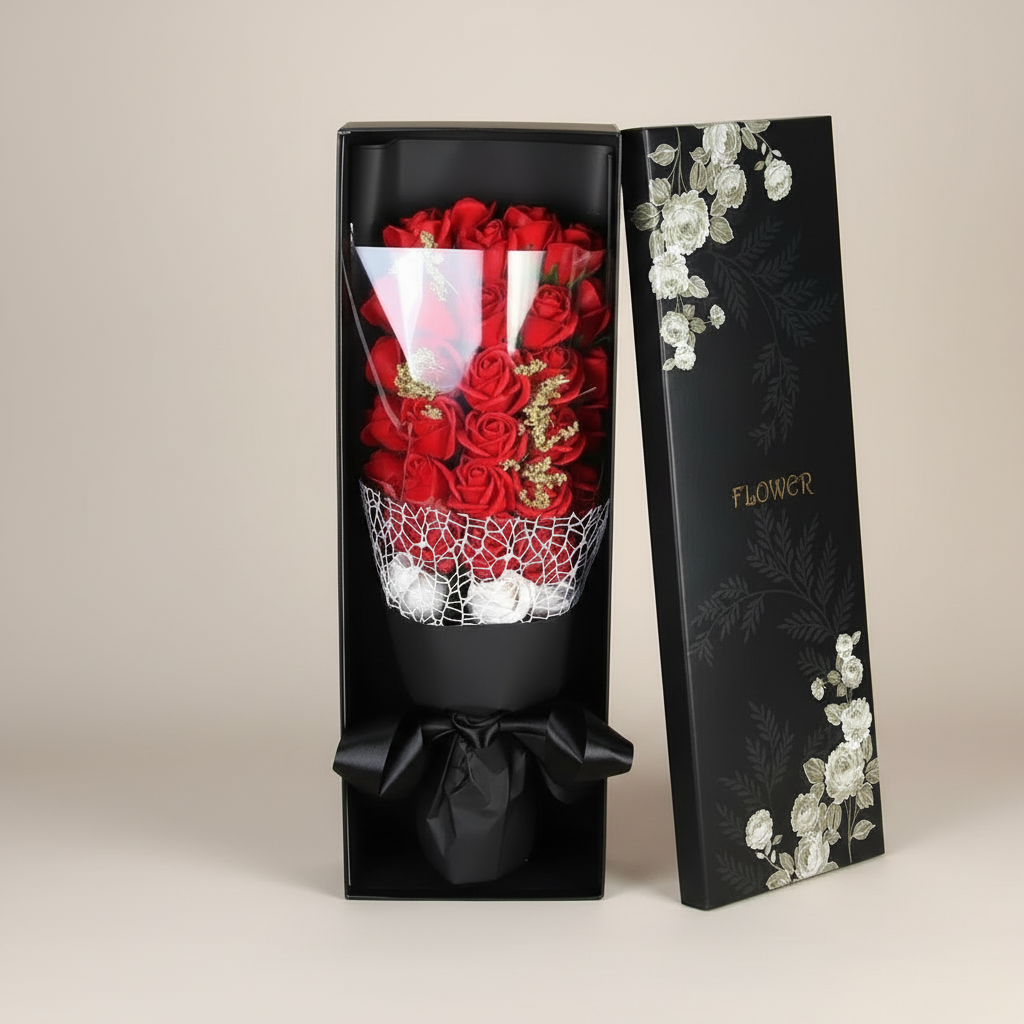
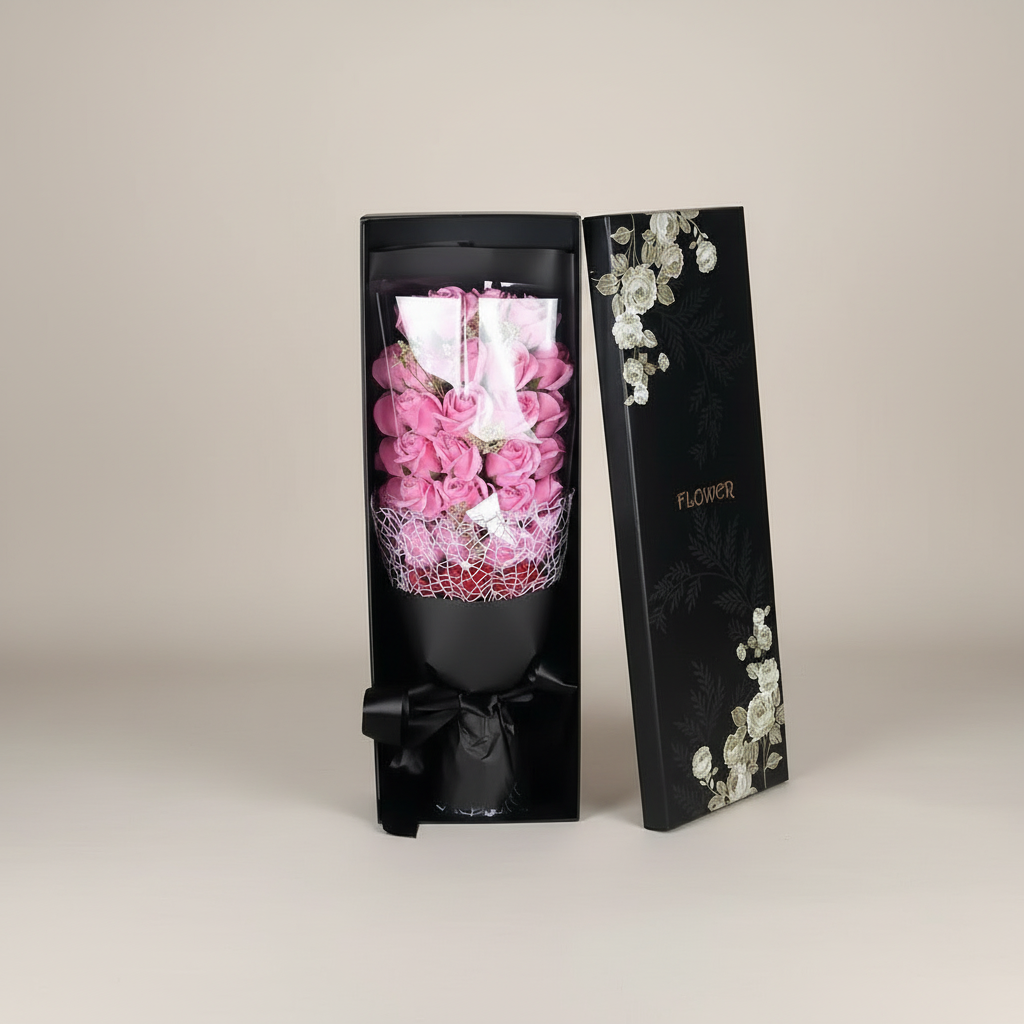
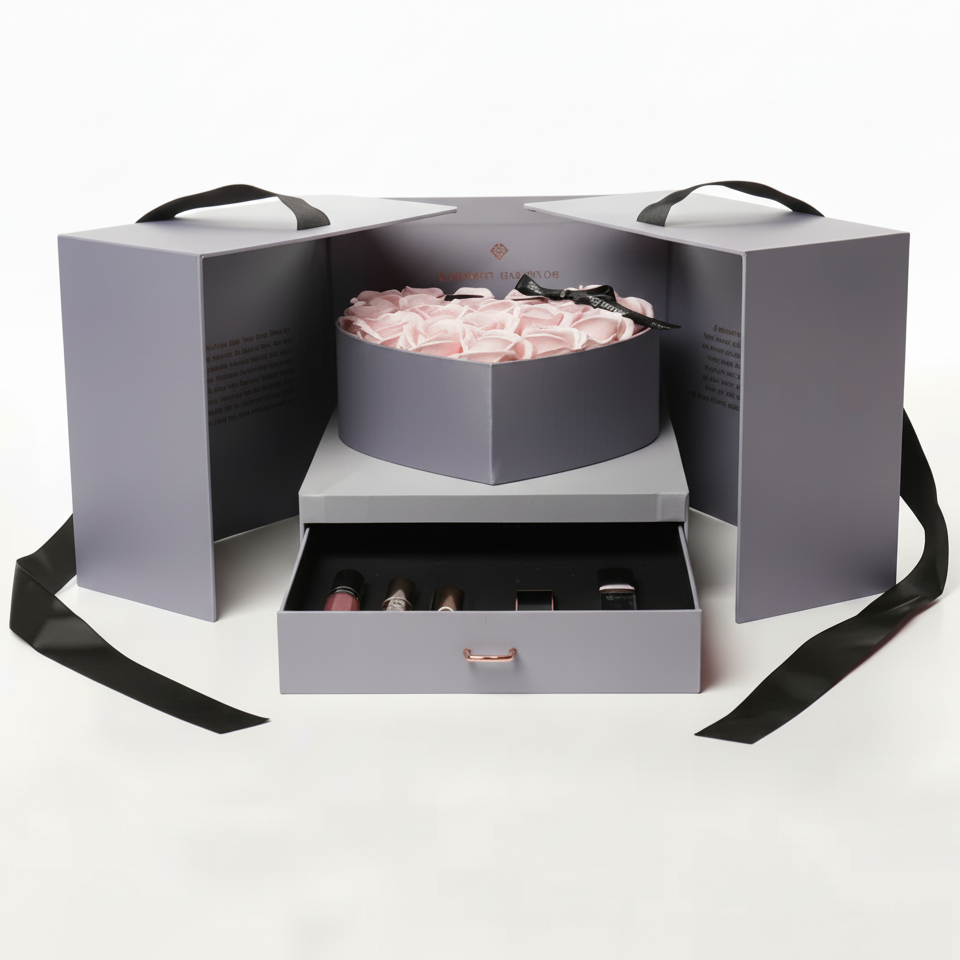
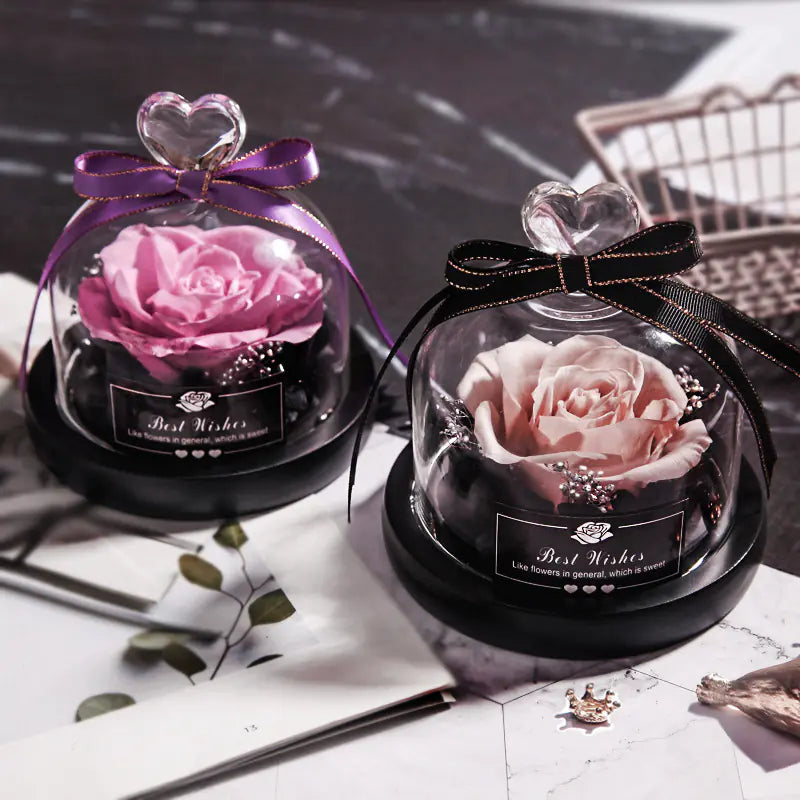
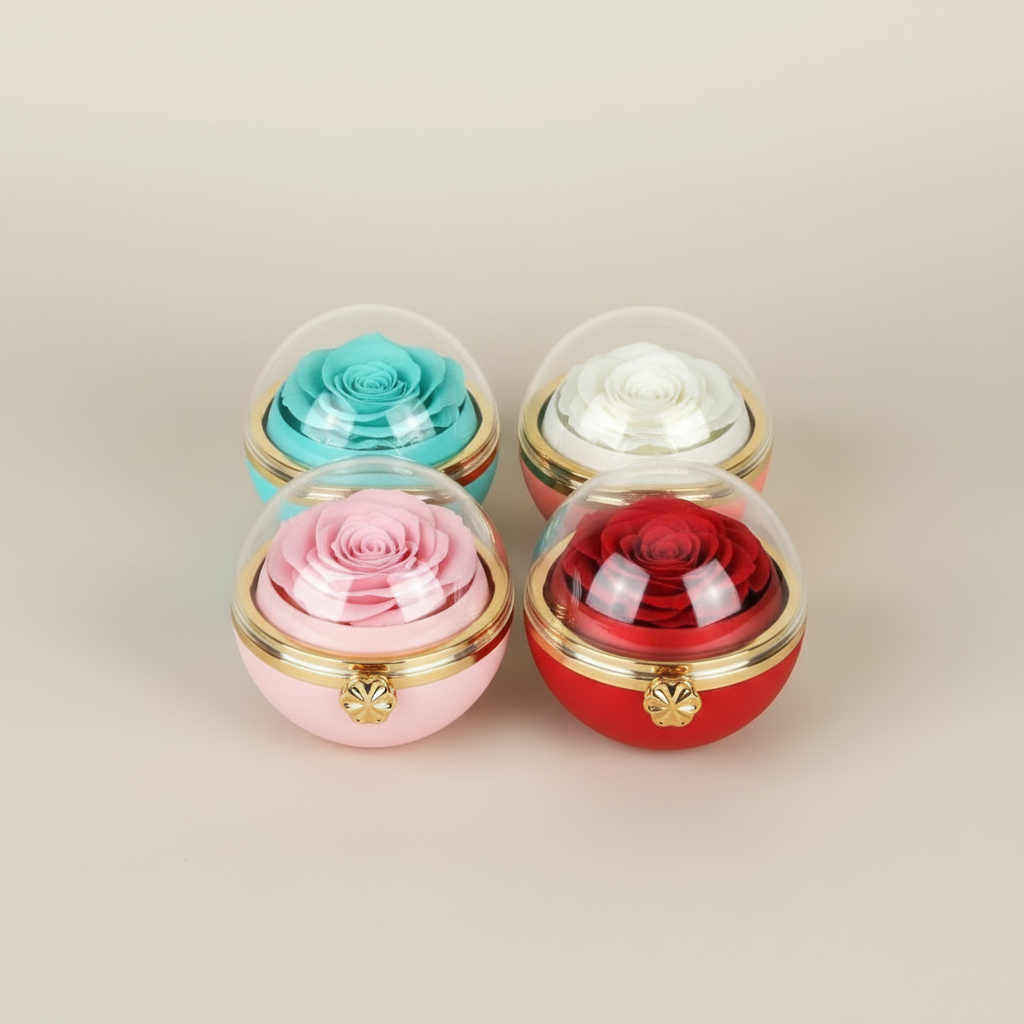
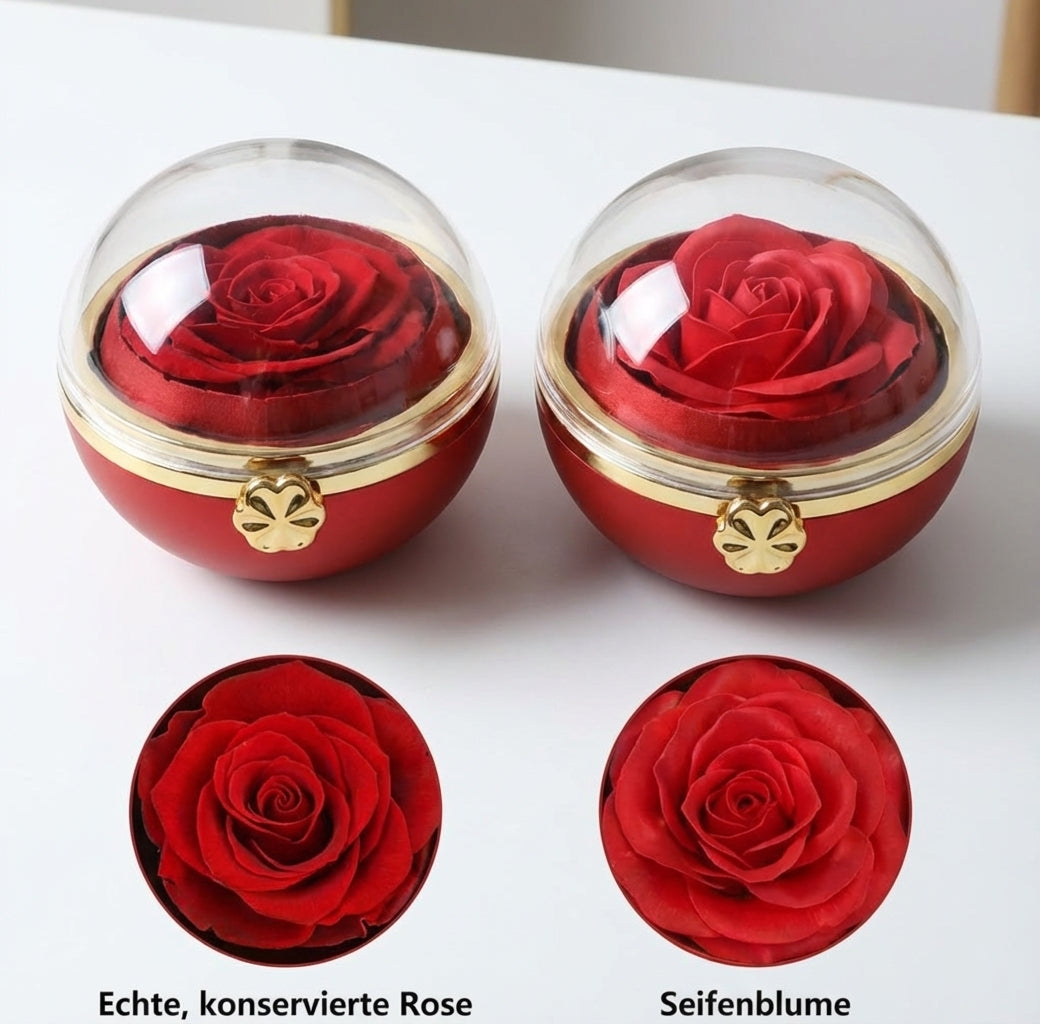
And they offer invaluable added value: An elegant gift box, which after unwrapping serves as storage for jewelry or keepsakes, becomes a cherished part of the gift itself. This is precisely the idea we embrace at Amorlune, where thoughtful packaging truly completes the entire experience. Discover here how an Eternal Rose gift box combines beauty and functionality to create lasting joy. In this way, the packaging transforms from a disposable item into a treasured memento.
How to properly dispose of and recycle packaging
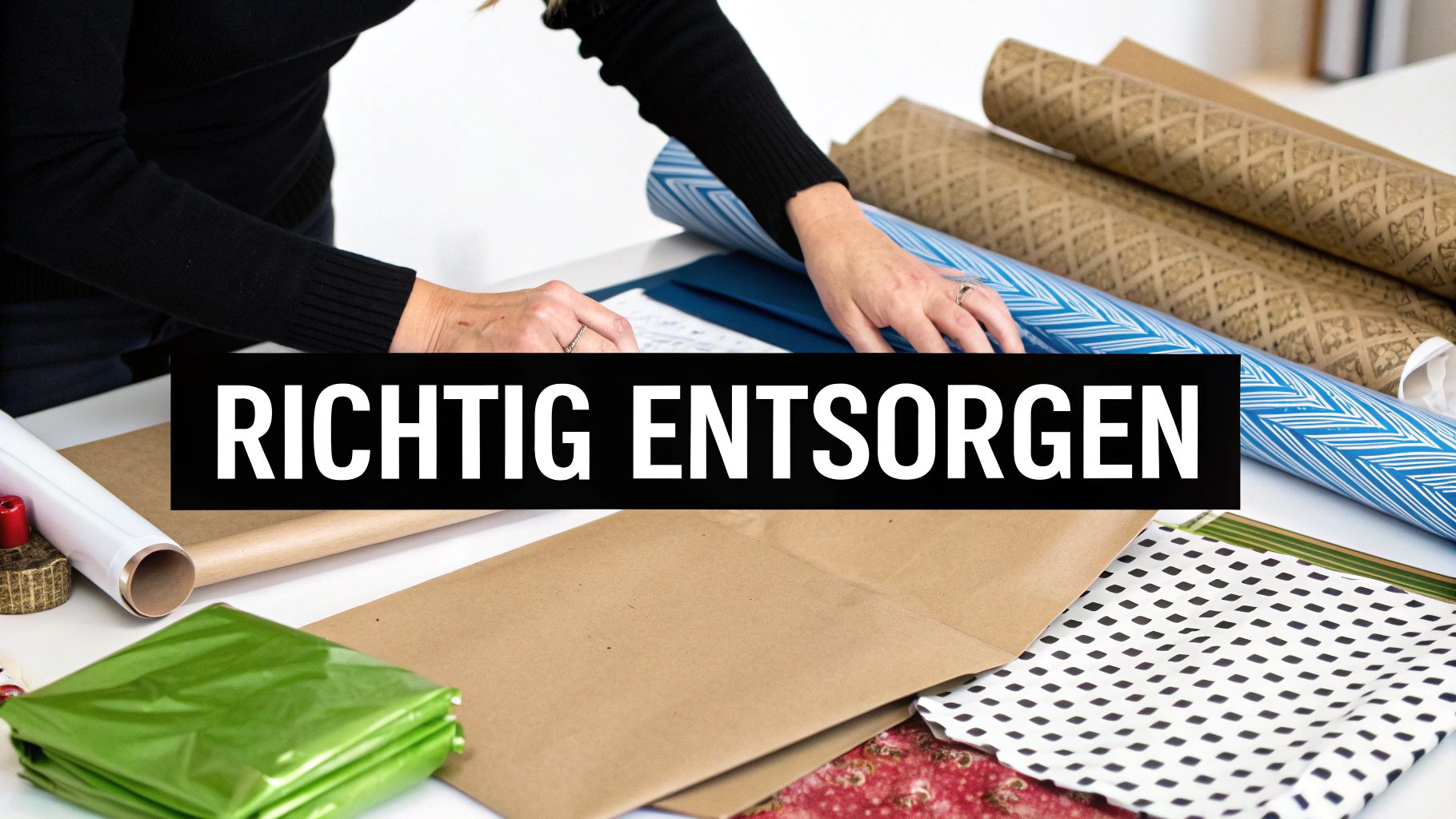
The most wonderful moment is over, the gift unwrapped, the joy immense – and what happens to all the packaging now? For sustainable gift wrapping, this is the crucial moment. Because it's at the recycling bin that it's decided whether valuable raw materials get a second chance or are lost forever.
Sometimes a single wrong decision can ruin the entire sustainability effort. Imagine a piece of glittery paper ending up in the recycling bin – that alone can contaminate an entire batch of recyclable material. Proper disposal is therefore not a minor detail, but the final, yet absolutely crucial, step in the recycling process.
A short guide to proper waste separation
Don't worry, the rules are often simpler than you think. The key is to identify the materials and know where they belong. Most often it's coatings, adhesive residue, or glitter that interfere with the recycling process.
By following these simple basic rules, you can help your packaging materials get a second chance:
- Plain paper and cardboard: Uncoated gift wrap (such as recycled or grass paper), cardboard boxes and paper bags clearly belong in the waste paper recycling .
- Coated glossy paper: The tear test helps here. Does the torn edge feel fibrous? Then it goes into the recycling bin. But if it tears like plastic film, unfortunately it belongs in the general waste .
- Plastic films and ribbons: Gift wrap made of cellophane or chic plastic ribbons belong in the yellow bag or the recycling bin .
- Adhesive tape: An important little step: Always peel the adhesive tape off the cardboard before you throw it in the recycling. The adhesive tape itself goes in the general waste .
A common misconception is that "anything made of paper" can go in the waste paper bin. However, glitter particles, plastic coatings, and certain dyes cannot be properly filtered out during the recycling process, making the new paper significantly lower quality.
This small effort really pays off. A functioning recycling system depends on properly separated materials. Your contribution at home is therefore a direct investment in protecting our resources.
What happens to the individual materials?
Behind the different waste bins are some pretty clever systems. If we separate our waste correctly, we make it easy for these systems to recover valuable raw materials from our "waste".
The German Federal Environment Agency reported an impressive recycling rate of 68.5 percent for packaging waste in Germany in 2022. With a total of 19 million tons of waste, that's a huge amount! These figures show that the system works, and proper disposal – including of gift packaging – makes a measurable contribution. If you'd like to delve deeper, you can find more information about packaging waste data on the Federal Environment Agency's website .
- Waste paper: Dissolved in water, freed from printing ink and processed into new paper products – a true cycle.
- Yellow bag: The plastics are sorted, shredded, washed, and melted down into granules. These granules then become the raw material for new products.
- Residual waste: Everything that ends up here is usually incinerated to generate energy. The raw materials themselves are thus lost to the recycling loop.
Ultimately, the best waste is, of course, the waste that is never produced in the first place. Reusable packaging, like the elegant boxes from Amorlune, is the ideal solution. Should they eventually need to be disposed of after many, many years, the cardboard can be easily recycled. However, it's much better to simply reuse the boxes – for example, for storage. If you're looking for inspiration on how to store jewelry stylishly and safely, you'll find many clever ideas in our jewelry storage guide. This way, you extend the life of the packaging and conserve resources at the same time.
Your journey to sustainable gift-giving starts now
You now have a wealth of knowledge and inspiration at your fingertips to make the world of gift-giving a little bit better. Essentially, the message is quite simple: Every sustainable gift wrap is a double gesture of appreciation. One for the person you're making happy, and one for our planet.
It's not about being perfect overnight. The first conscious step is much more important. Perhaps you could try the furoshiki technique for the next birthday, use old newspaper as a surprisingly stylish cover, or deliberately choose a beautiful, reusable box.
Your strategy for greener gift-giving
To make getting started even easier, we've summarized the most effective approaches for you. Consider this list your personal starting point – you can adapt and expand it as you wish.
- Upcycling with creativity: Why not use what you already have at home? Old maps, discarded sheet music, or fabric scraps can be transformed into unique packaging with a little imagination, telling a personal story.
- The power of reuse: Invest in durable items like beautiful fabric towels, tins, or high-quality boxes. In the long run, this not only saves money but also actively reduces the amount of waste.
- Shop consciously: When buying something new, look out for recognized labels such as the Blue Angel or FSC. This way you can be sure that your choice really makes a positive difference.
- Natural decoration: Replace the usual plastic ribbons with dried flowers, twigs, or pine cones. Such small details from nature instantly give any gift an authentic and loving touch.
The path to a more sustainable life often begins with a small but conscious decision. Your choice of gift wrapping can be just that beginning – a small step that has a big impact and inspires others.
Every time you choose an eco-friendly alternative, you help conserve resources and set an example for greater mindfulness. Gradually integrate these ideas into your own traditions and discover the joy that comes from a thoughtful, sustainable gift. Your journey doesn't begin sometime in the future, but right now – with the next gift you wrap.
Frequently asked questions: Your questions, our answers
Giving sustainable gifts often raises very specific questions. Here I've compiled the most frequently asked questions for you and provide practical answers that will really help you in everyday life.
Is brown wrapping paper automatically sustainable?
Not always, but it's often a much better choice than classic supermarket wrapping paper. Make sure it's made from 100% recycled material . A label like the "Blue Angel" provides additional assurance.
What you should avoid is coated or heavily colored paper. This interferes with the recycling process. Untreated, natural-colored recycled paper is one of the best single-use options you can find.
What do I do with glittery wrapping paper?
However beautifully it sparkles – glitter, foil, or metallic effects on wrapping paper almost always mean: straight into the trash . These materials cannot be separated from the paper fibers during recycling and, in the worst case, render an entire load of waste paper unusable.
Even though it's difficult, proper disposal is really important here to avoid burdening the system. The best solution, of course, is to leave it alone in the first place.
The simplest way to achieve greater sustainability is often avoidance. Every roll of glitter paper that isn't bought is a small victory for the environment and makes waste management easier for everyone.
Are reusable packaging options really that much better?
Yes, in the long run they are almost always the superior choice. Sure, fabric packaging or a high-quality gift box initially has a larger ecological footprint during production. But this difference is surprisingly quickly offset.
A rule of thumb states that after just a few uses, a cloth bag or a sturdy box becomes more environmentally friendly than disposable paper. And since they are often used for years, their overall environmental impact is ultimately unbeatable.
Does environmentally friendly packaging really make a difference?
And what a decision it is! Every single decision sends a signal to the market, showing: We want things to be different. The demand for sustainable solutions is growing steadily. A study has shown that 73% of people would rather wait a little longer for an order if it means it will be delivered in a more environmentally friendly way.
The message becomes even clearer here: 85% actually want reusable packaging. Your choice directly contributes to companies adapting their offerings and making sustainable solutions the new normal. A small lever with a huge impact.
How can I avoid using adhesive tape?
Good question, because adhesive tape is a real hindrance when it comes to recycling. Luckily, there are beautiful and practical alternatives:
- Jute twine or cotton yarn: It holds everything securely together and looks wonderfully rustic and chic.
- Folding techniques: With the Japanese Furoshiki method (for fabrics) or clever paper folds, you don't need any glue at all.
- Sealing wax: A very elegant and traditional way to seal a gift, giving it a very personal touch.
- Paper tape: If you absolutely must use adhesive tape, then opt for paper-based versions. These can simply be recycled with waste paper and will decompose there.
Each of these questions illustrates that the path to more conscious gift-giving consists of many small, thoughtful decisions. At Amorlune, we've firmly integrated this idea into our products. Our elegant gift boxes are not just beautiful packaging, but designed as durable jewelry storage – a gift that lasts. Discover for yourself how we combine beauty and sustainability: https://amorlune.com

Written by Dennis Schröder